
Most folks think of peanut butter as a breakfast or snack thing, right? But this savory sauce, it’s a kitchen secret. It can turn a plain stir-fry into something richer, deeper, almost smoky. And honestly, it’s so easy to tweak, it’s become my go-to for quick dinners.
I love how this sauce kind of defies expectations. It’s creamy, nutty, with a salty tang—perfect for drizzling over grilled veggies, tossing with noodles, or even as a dip. Plus, it makes my tiny apartment smell like a spicy peanut paradise, which is a bonus on busy nights.
The unexpected versatility of savory peanut butter sauce beyond Asian dishes.
Why this sauce matters—my kitchen stories
- I love how this sauce adds a punch of umami without relying on heavy creams.
- Sometimes I toss in a dash of hot sauce for a spicy kick—instant comfort.
- Making this sauce feels like a small act of culinary rebellion in my kitchen.
- It’s a quick fix that makes me feel like a pro, even when I’m tired.
A little inspiration behind the sauce
- This sauce was born out of a fridge raid—peanut butter, soy, garlic—threw it all together and loved it.
- It’s a testament to how simple pantry staples can become something special.
- Once I realized how well it paired with roasted vegetables, I started slathering it on everything.
A brief history and fun facts about savory peanut sauce
Peanut sauce has roots in Southeast Asian cuisines, especially Thailand and Indonesia.
Savory peanut sauces often include soy or fish sauce, adding umami complexity.
The idea of using peanut butter as a cooking ingredient is surprisingly recent, gaining popularity in the last 50 years.
In some cultures, peanut sauces are served with rice, noodles, or grilled meats, making them incredibly versatile.
Deep dive into key ingredients
- Peanut butter: I prefer creamy, but crunchy adds texture. It’s rich and oily, so stir well.
- Soy sauce: It’s the umami backbone—use tamari for gluten-free, but watch for saltiness.
- Garlic: Fresh is best—smells sharp and pungent, then sweetens as it cooks.
- Vinegar: Brightens everything—use rice vinegar for mildness, or apple cider for a tangier punch.
- Water or broth: Loosens the sauce—hot, to help blend flavors smoothly.
Spotlight on peanut butter and soy sauce
Soy sauce: Salty, savory, with a dark, glossy sheen. It adds depth and umami.
- Peanut butter: Creamy, luscious, with a roasted aroma. It melts into the sauce, creating a thick, nutty base.
- Peanut butter: Watch out for natural oils—stir well to keep it smooth and uniform.
Garlic: Sharp, pungent, with a slight sweetness once cooked. It’s the aromatic foundation.
- Soy sauce: Beware of overuse; it can overpower other flavors, so add gradually.
- Soy sauce: It contributes a smoky, fermented aroma that’s essential for depth.
Smart substitutions for different diets and tastes
- Dairy-Free: Use coconut milk or cream for a richer, tropical flavor that’s dairy-free.
- Sweetener: Swap honey for maple syrup or agave; adjust quantity for sweetness level.
- Salt: Tamari or coconut aminos for gluten-free, less salty alternatives.
- Vinegar: Lemon juice or lime juice can brighten the sauce with a citrus twist.
- Nut Butter: Almond or cashew butter for different nutty notes, slightly softer texture.
Step-by-step guide to a perfect savory peanut butter sauce
Equipment & Tools
- small saucepan: to gently heat and mix ingredients
- whisk: to smooth out the sauce and avoid lumps
- measuring spoons: to ensure accurate flavor balance
- spoon: for tasting and serving
Step 1: Gather your equipment: a small saucepan, whisk, measuring spoons, and a spoon for tasting.
Step 2: Heat the saucepan over medium-low (about 160°C/320°F). Add a splash of oil if your peanut butter is stubborn.
Step 3: Pour in peanut butter, soy sauce, rice vinegar, and a touch of honey or maple (if using). Stir constantly until smooth, about 2 mins.
Step 4: Add garlic and ginger (if using). Cook until fragrant, about 30 seconds. Keep stirring.
Step 5: Gradually pour in warm water or broth, a tablespoon at a time, until the sauce loosens to your desired consistency.
Step 6: Taste and adjust salt, acidity, or sweetness. It should be umami-rich with a subtle tang.
Step 7: Check for doneness: sauce should be silky, not clumpy, with a glossy sheen. If it’s separating, stir in a tiny bit more water.
Step 8: Remove from heat. Rest for 5 minutes if not using immediately. Serve warm, drizzled over your favorite dishes.
Step 9: Checkpoints:
Step 10: – Color: rich, peanut-buttery hue.
Step 11: – Texture: smooth and pourable.
Step 12: – Aroma: roasted, nutty with garlic and ginger notes.
Let the sauce rest for 5 minutes off heat to thicken slightly. Serve immediately or store in a jar.
How to Know It’s Done
- Color should be a deep, creamy peanut hue.
- Texture should be silky, not greasy or clumpy.
- Aroma should smell roasted, with hints of garlic and ginger.
Essential tips for perfect sauce
Low and slow: Keep the heat moderate to prevent burning the garlic and ginger.
Constant stirring: Keeps the sauce smooth and prevents sticking or separating.
Taste as you go: Salt, acidity, and sweetness are adjustable, don’t rely solely on measurements.
Use warm water: Helps thin the sauce without breaking the emulsion.
Add oil at the end: Optional, for extra sheen and richness.
Common mistakes and how to fix them
- FORGOT to stir? Restock with a splash of hot water and stir vigorously.
- DUMPED too much soy? Dilute with more water or broth, then reheat.
- OVER-TORCHED the garlic? Remove the pan from heat immediately, start again.
- Sauce too thick? Thin with warm water, stirring until silky.
Fast fixes for common issues
When sauce is too thick, splash in hot water, then stir vigorously.
When too salty, dilute with a little more water or a squeeze of lemon.
When flavor is dull, add a dash more soy or vinegar.
Splash in a teaspoon of sesame oil for extra nuttiness.
Patch a split sauce by whisking in a teaspoon of warm water until smooth.
Make-ahead tips and storage secrets
Prepare the sauce a day ahead; it tastes even better after sitting overnight.
Store in an airtight jar or container in the fridge for up to 3 days.
Reheat gently on the stove or in the microwave, stirring until smooth.
The flavors deepen overnight, so it’s worth making in advance.
Practical tips for a smooth, flavorful sauce
What makes this peanut butter sauce savory? It’s balanced with soy sauce, garlic, and a splash of vinegar, not sweet.
Can I use natural peanut butter? Yes, but stir it well and expect a slightly thinner, oilier sauce.
How do I prevent the sauce from separating? Keep it warm and stir often. Adding a tiny bit of cornstarch slurry helps.
Is this sauce good cold too? It’s best warm, but it can sit in the fridge for a day and reheat gently.
Can I make this ahead? Yes, prep the sauce, store in fridge for up to 3 days, then reheat gently.
What if my sauce is too thick? Thin it with a splash of hot water or broth, stir well.
Can I substitute other nut butters? Almond or cashew work, but they change the flavor and texture.
How spicy can I make it? Add chili flakes or sriracha for a kick, start small and taste as you go.
Is this sauce gluten-free? Use tamari instead of soy sauce for a gluten-free version.
Can I add other flavors? Try ginger, lime, or a dash of sesame oil for more depth.
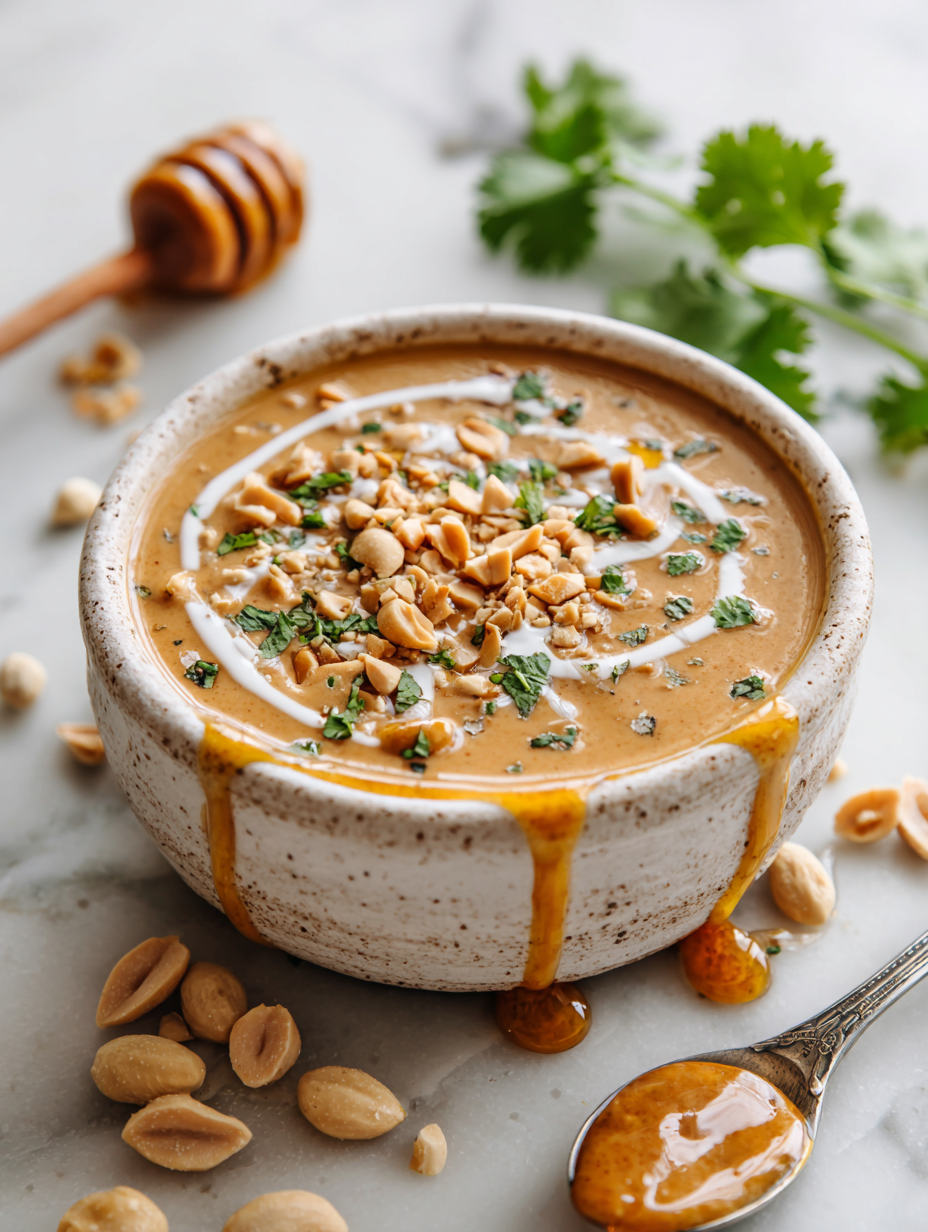
Savory Peanut Butter Sauce
Ingredients
Equipment
Method
- Gather your small saucepan, whisk, measuring spoons, and a spoon for tasting. Measure out the peanut butter and set aside.
- Place the saucepan over medium-low heat. Add the peanut butter, soy sauce, rice vinegar, and honey, and stir constantly with a whisk. Continue until the mixture is smooth, fragrant, and starting to bubble gently, about 2 minutes.
- Add the minced garlic to the saucepan. Cook, stirring constantly, until fragrant—about 30 seconds—until you smell the sharp, roasted aroma of garlic filling the air.
- Gradually pour in warm water or broth, a tablespoon at a time, while whisking vigorously. Continue until the sauce reaches your desired silky, pourable consistency and the ingredients are fully integrated.
- Taste the sauce and adjust the flavor as needed—add more soy for saltiness, vinegar for tang, or honey for sweetness. The sauce should be rich, nutty, and balanced in umami and acidity.
- Remove the saucepan from heat. Let the sauce rest for a few minutes to thicken slightly and deepen the flavors. It should be glossy, smooth, and fragrant with roasted garlic and peanut aroma.
- Pour the savory peanut butter sauce over your favorite dishes—stir-fried vegetables, noodles, grilled meats—or serve as a dip. Enjoy the rich, nutty flavor and velvety texture.
Notes
And really, it’s versatile enough to keep in the fridge for a few days, ready to rescue a bowl of plain rice or leftover grilled chicken. The flavors deepen overnight, so don’t be afraid to make a batch and keep it warm in a jar. It’s honestly a little culinary magic in a jar.

Founded by Rachel Morgan, a proud home cook and foodie from Austin, Texas, this blog is all about transforming everyday meals into moments of joy.