
Sometimes, it’s not just about the drink but about the small moments it creates. This gingerbread latte is my way of holding onto the cozy chaos of home during chilly mornings.
I love how the smell of fresh ginger and baking spices fills the kitchen, turning a simple cup into a ritual. It’s a scent that wraps around you like a favorite blanket, especially when outside is gray and cold.
The Unseen Warmth of Home Kitchen Traditions
Why I Keep Coming Back to This Recipe During Winters
- I love how this latte makes my kitchen smell like a gingerbread house.
- There’s a small thrill in balancing sweet, spicy, and bitter in one cup.
- Making this takes me back to childhood holidays, full of baking chaos and cozy mornings.
- I feel a sense of pride in crafting a seasonal drink from scratch, it’s grounding.
- Sharing this with friends turns a simple moment into a shared memory.
My Warmth in a Mug
- I first started experimenting with ginger syrup during a rushed holiday morning, trying to recreate a cozy cafe vibe at home.
- The idea of combining fresh ginger with molasses came from a desire to deepen the spice profile, making it more complex.
- I love the contrast of the fiery ginger against the smooth milk and dark coffee—it’s like a flavor dance.
The Roots and Quirks of Gingerbread and Spiced Lattes
Ginger has been used medicinally for centuries, especially in warming drinks during cold seasons.
Molasses in gingerbread recipes dates back to medieval Europe, adding depth and richness.
The gingerbread latte is a modern twist on traditional holiday spices, popularized by cafes in the early 2000s.
Cinnamon and ginger are both warming spices believed to boost circulation and comfort the soul.
This drink echoes old-fashioned kitchen warmth, where spices filled the air and stories were shared over mugs.
Ingredients Breakdown and Tweak Tips
- Ginger: Fresh ginger gives a zesty, pungent heat. Use more for a spicier kick or less for subtle warmth.
- Molasses: Adds depth and a dark sweetness. Substitute with dark honey if needed, but expect a different flavor.
- Milk: Whole milk creates a rich, creamy foam. Use almond milk for a lighter, nutty note.
- Cinnamon: Ground cinnamon adds warmth. Fresh cinnamon sticks can be simmered for a more intense aroma.
- Sweetener: Brown sugar or maple syrup can replace molasses for a lighter, different sweetness profile.
Spotlight on Ginger and Molasses
Ginger
- Ginger: It’s fiery when fresh, releasing a sharp, spicy aroma when grated. It responds quickly to heat, intensifying as it cooks.
- Molasses: It’s thick, dark, and sticky, adding a deep caramel-like richness. It can seize if heated too quickly, so add slowly.
Molasses
- Ginger: Fresh ginger’s pungency is best when grated finely, releasing its volatile oils. It’s the soul of this latte.
- Molasses: Its velvety texture lends body and complexity, balancing the spice’s brightness with a smoky sweetness.
Substitutions for Flexibility and Flavor
- Dairy-Free: Swap cow’s milk for almond or oat milk. Expect a nuttier, lighter flavor.
- Sweetener: Use honey or maple syrup if you prefer a different kind of sweetness, but adjust for flavor.
- Spice: Add a pinch of nutmeg or cloves for a more layered spice profile.
- Ginger: Dried ginger powder can replace fresh in a pinch, but it’s less bright and pungent.
- Coffee: Use cold brew for a smoother, less bitter base, especially if you prefer a less intense coffee flavor.
Step-by-Step Guide to Your Gingerbread Latte
Equipment & Tools
- Small saucepan: Heat milk and make ginger syrup.
- Frother or whisk: Create thick, velvety foam.
- Espresso machine or coffee maker: Brew strong coffee or espresso.
- Strainer: Remove ginger from syrup.
- Mugs: Serve your latte beautifully.
Step 1: Prepare ginger syrup: combine 1 cup water, 1/2 cup brown sugar, 1/4 cup molasses, and 3 tbsp grated ginger in a small pot.
Step 2: Bring to a simmer over medium heat, stirring until sugar dissolves. Cook for 10 minutes, then strain and set aside.
Step 3: Brew a strong espresso or dark coffee—about 30 ml (1 oz) per serving.
Step 4: Heat milk in a small saucepan over low heat (~65°C/150°F), stirring constantly to prevent burning.
Step 5: Froth milk using a whisk or milk frother until thick and velvety.
Step 6: Pour the brewed coffee into a mug, add 2-3 tbsp ginger syrup (adjust to taste).
Step 7: Gently pour the heated milk over the coffee, holding back foam with a spoon, then spoon foam on top.
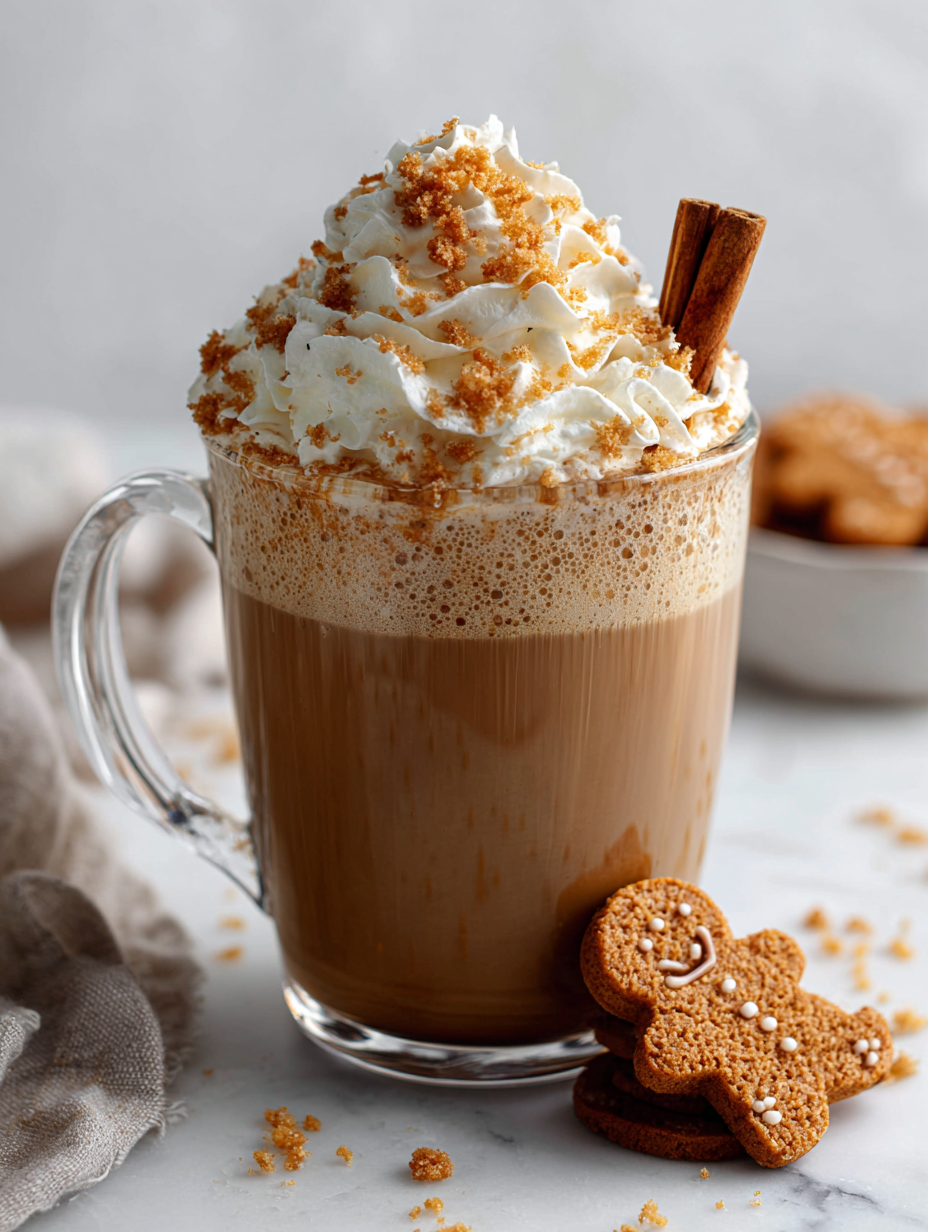
Step 8: Garnish with whipped cream, a sprinkle of cinnamon, and a slice of candied ginger.
Step 9: Checkpoints:
Step 10: – Milk should be steaming but not boiling.
Step 11: – Foam should be thick and velvety, not frothy and bubbly.
Step 12: – The latte should smell rich with ginger, cinnamon, and roasted coffee.
Step 13: Fixes:
Step 14: – If the milk scalds, lower heat and stir more often.
Step 15: – If the syrup is too sweet, add a splash of hot water.
Step 16: – If the foam is thin, re-whisk or add a splash more milk.
Allow the latte to sit for a minute to settle before tasting. Finish with a light dusting of cinnamon or a small ginger slice.
How to Know It’s Done
- Milk steams without burning or boiling.
- Latte top has a smooth, thick foam.
- Aromas of ginger, cinnamon, and coffee are prominent.
Tips & Tricks for a Perfect Gingerbread Latte
Use fresh ginger for a zesty, punchy flavor that’s more vibrant than powdered.
Froth milk just until it’s thick and velvety; over-frothed, it turns bubble-y.
Keep the heat low to prevent scorching or burning the milk.
Strain the syrup while hot for a clear, smooth finish, avoiding gritty bits.
Warm your mug beforehand to keep the latte hot longer.
Common Mistakes and How to Fix Them
- FORGOT TO strain the ginger? Use a fine sieve to avoid gritty syrup.
- DUMPED THE milk too hot? Lower the heat and stir faster to prevent scorching.
- OVER-TORCHED the milk? Start with fresh, cold milk and keep heat low from the start.
- MISJUDGED sweetness? Add more syrup or a pinch of sugar, tasting as you go.
Fast Fixes for Common Latte Mishaps
When milk is too thin, re-froth with a bit more milk until thick.
If the latte is too sweet, add a splash of hot water or unsweetened coffee.
Splash a little vanilla extract into the milk for extra depth.
Patch a burnt syrup by adding a splash of lemon juice to cut the bitterness.
Shield the milk from direct heat to prevent scalding and develop a richer flavor.
Prep and Storage Tips
Ginger syrup can be made 2-3 days ahead and stored in the fridge.
Reheat the syrup gently on the stove before mixing.
Froth milk fresh; it loses some fluffiness after sitting.
Latte can be stored in the fridge for up to 24 hours, but best enjoyed fresh.
Reheat gently in microwave or on stove, watching for bubbling and smell of toasted milk.
Why this gingerbread latte matters to me
What makes this gingerbread latte different from others? It’s spiked with fresh ginger and a hint of molasses, giving it a deep, warming aroma and a slightly spicy kick.
Can I make this vegan? Yes, just swap cow’s milk for almond or oat milk, and use a vegan-friendly sweetener.
How do I get the perfect foam? Use a frother or a whisk to aerate the milk until it’s thick and velvety.
What’s the best ginger to use? Fresh ginger root, finely grated, offers a bright, zingy flavor that’s more vibrant than powdered.
Can I prepare this ahead? Make the ginger syrup the day before; reheat and whisk in milk just before serving.
How do I prevent burning the milk? Keep the heat low and stir constantly; remove from heat as soon as it’s steaming.
What’s the ideal coffee base? A strong, rich espresso or dark brewed coffee works best to balance the spices.
Can I add other spices? Yes, a pinch of nutmeg or cloves can deepen the spice profile.
How do I adjust sweetness? Add honey or brown sugar gradually, tasting as you go, until it’s just right.
What’s a good garnish? Whipped cream, a sprinkle of cinnamon, and a small slice of candied ginger make it festive.
Gingerbread Latte
Ingredients
Equipment
Method
- Combine water, brown sugar, molasses, and grated ginger in a small saucepan. Bring to a gentle simmer over medium heat, stirring until the sugar dissolves and the mixture begins to bubble lightly. Let it simmer for about 10 minutes, then strain out the ginger pieces and set the syrup aside.
- Brew a strong shot of coffee or espresso for each serving and pour into your mugs.
- Stir 2-3 tablespoons of the ginger syrup into each mug of coffee, adjusting to taste for sweetness and spice.
- Heat the milk gently in a small saucepan over low heat until steaming, without boiling. Once hot, froth the milk using a whisk or milk frother until thick and velvety, with visible microfoam.
- Pour the heated milk over the coffee and syrup mixture, holding back the foam with a spoon. Then, spoon the velvety foam on top of each mug.
- Garnish each latte with a pinch of ground cinnamon and a small slice of candied ginger if desired, for a festive touch.
Notes
Every cup I pour feels like a small celebration of the season, a warm hug in a mug that turns ordinary mornings into something special.

Founded by Rachel Morgan, a proud home cook and foodie from Austin, Texas, this blog is all about transforming everyday meals into moments of joy.