
This dish is my twist on the simple tomato pasta, but with a secret ingredient—coconut milk—that gives it an almost luxurious, silky feel. It’s a way to turn a humble meal into something a little more indulgent, even in the middle of a busy week.
When I first tried adding coconut milk, I was wary it might clash with the acidity of the tomatoes. Instead, it mellowed out the bright tang, creating a balanced, comforting sauce that coats every strand of pasta. It’s surprisingly versatile, too, fitting neatly into both weeknight dinners and casual gatherings.
Focusing on the unexpected richness that coconut milk adds to a tomato-based pasta, creating a creamy texture without dairy.
Why this pasta became my go-to comfort meal.
- I love how this dish turns out—comforting yet fresh, with that subtle coconut aroma.
- There’s a bit of chaos in my kitchen every time I make it, as I juggle pasta, sauce, and herbs.
- I feel proud when I see friends reach for seconds, no one guessing it’s vegan.
- Recreating this dish always reminds me of summer days by the coast, basking in the sun and feeling free.
Inspiration behind my creamy vegan tomato pasta.
- I stumbled upon this idea when I was experimenting with coconut milk in savory dishes. I wanted something quick, nourishing, and different from my usual tomato pasta.
- The richness of coconut pairs unexpectedly well with the acidity of tomatoes, creating a harmonious blend that feels indulgent without being heavy.
- It’s become a staple in my kitchen because it’s flexible—add greens, extra herbs, or protein, and it still shines.
Origin and fun facts about this vegan tomato pasta.
This recipe is inspired by the creamy tomato sauces common in Mediterranean coastal cuisines, but with a tropical twist.
Coconut milk has been used in cooking for centuries in Southeast Asia, often paired with spicy, tangy flavors.
The combination of tomatoes and coconut is quite popular in vegan and vegetarian dishes for its rich, dairy-free creaminess.
This dish adapts traditional Italian pasta with a plant-based approach that’s both satisfying and eco-friendly.
Breaking down key ingredients.
- Tomatoes: Ripe, flavorful, they form the bright, tangy base. Use fresh or canned—just avoid watery ones.
- Coconut milk: Adds creamy richness with a subtle tropical sweetness. Look for full-fat for best texture.
- Garlic: The aromatic foundation. Fresh is best; it becomes sweet and mellow when cooked properly.
- Olive oil: For sautéing, adds depth. Use good quality for richer flavor.
- Fresh herbs: Basil or oregano brighten the dish. Add at the end to preserve their freshness.
Spotlight on tomatoes and coconut milk.
Tomatoes
- Tomatoes: Juicy, tangy, they provide the vibrant base. Ripe and flavorful makes all the difference.
- Coconut milk: Silky, slightly sweet, it transforms the sauce into something indulgent. Full-fat is richer, light is fine too.
Coconut milk
- Coconut milk: Its natural sweetness balances acidity. Shake well before using to ensure smoothness.
- It thickens as it cooks, so stir often to prevent sticking or burning.
Substitutions to customize your vegan tomato pasta.
- Dairy-Free: Use cashew cream instead of coconut milk for a nuttier flavor, slightly less tropical.
- Low-fat: Replace coconut milk with light coconut cream or a splash of plant-based milk, but expect less richness.
- Fresh tomatoes: Use canned crushed tomatoes for convenience, especially off-season.
- Herbs: Dried basil or oregano are quick substitutes; add early for flavor infusion.
- Pasta: Gluten-free or legume-based pasta can be used without much change in taste or texture.
Step-by-step guide to creamy vegan tomato pasta.
Equipment & Tools
- Large pot: To boil pasta
- Skillet: To make the sauce
- Wooden spoon: To stir and break down tomatoes
- Measuring spoons: To add seasonings
- Ladle: To transfer pasta water
Step 1: Bring a large pot of salted water to a boil. Cook pasta until al dente, about 8-10 minutes.
Step 2: While pasta cooks, heat a tablespoon of oil in a large skillet over medium heat. Add minced garlic, cook until fragrant, about 30 seconds.
Step 3: Pour in the canned tomatoes, breaking them apart with your spoon. Let simmer for 10 minutes, stirring occasionally.
Step 4: Stir in coconut milk, salt, and pepper. Simmer for another 5 minutes until the sauce thickens slightly.
Step 5: Drain the pasta, reserving a cup of pasta water. Toss pasta into the sauce, adding reserved water if needed to loosen.
Step 6: Taste and adjust seasoning. Add more salt, pepper, or herbs to your liking.
Step 7: Serve hot, topped with chopped fresh basil or oregano.
Let the pasta sit for a minute after draining to absorb residual heat and flavors. Toss with fresh herbs just before serving.
How to Know It’s Done
- Sauce should be thick enough to coat the pasta lightly.
- The garlic should smell fragrant, not burnt.
- Tomatoes should be broken down and bubbling gently.
Tips and tricks for perfect vegan tomato pasta.
MINCED GARLIC: Cook garlic gently to avoid bitterness and develop aroma.
using canned tomatoes: Break them down early for a smoother, more integrated sauce.
adding coconut milk: Stir in at the end to preserve its delicate flavor and creamy texture.
salt in water: Season generously for pasta to prevent blandness.
simmering: Keep sauce at a gentle simmer to avoid burning or sticking.
Common mistakes and how to fix them.
- FORGOT TO salt the pasta water? Add salt generously next time for better flavor.
- DUMPED too much coconut milk? Use less or add more tomato to balance the creaminess.
- OVER-TORCHED garlic? Quickly add a splash of water and turn down heat.
- SAUCE IS TOO THICK? Stir in a bit of pasta water or plant-based milk to loosen it up.
Fast fixes for common kitchen mishaps.
When sauce separates, whisk in a teaspoon of warm water to unify.
If pasta sticks, rinse briefly with hot water and toss with a bit of oil.
Splash some lemon juice if sauce feels flat or dull.
Patch over-salted sauce with a splash of coconut milk or more tomatoes.
Shield burnt garlic by removing the pan from heat immediately.
Make-ahead tips and storage ideas.
Cook the pasta ahead and store in an airtight container for up to 2 days. Reheat with a splash of water or plant milk.
The sauce can be made a day in advance; keep it refrigerated for up to 3 days. Reheat gently, stirring often.
The flavors deepen over time, especially if herbs are added after reheating.
Reheat the pasta and sauce in a skillet over low heat until steaming hot and fragrant.
Practical answers to common questions about this vegan tomato pasta.
Can I use canned tomatoes? Yes, canned crushed or whole peeled tomatoes work well, just blend them smooth if needed.
Is this pasta suitable for meal prep? Absolutely, it keeps well in the fridge for up to 3 days, though the sauce may thicken.
Can I make it gluten-free? Sure, swap out the pasta for your favorite gluten-free variety, just watch cooking times.
What if I don’t have coconut milk? Use any plant-based cream or even thickened cashew cream for richness.
Can I add other veggies? Spinach, zucchini, or mushrooms blend in nicely, just sauté them with the garlic.
Is there a way to make it spicier? Add red pepper flakes or a dash of hot sauce during simmering.
Can I use fresh herbs instead of dried? Fresh basil or oregano can brighten it up, just add at the end.
What’s a good protein addition? Tofu, tempeh, or chickpeas add satisfying texture and protein.
How do I make it creamier? Blend a portion of the sauce until smooth before mixing back in.
Can I double the recipe easily? Yes, just keep the simmering gentle to avoid burning the sauce.
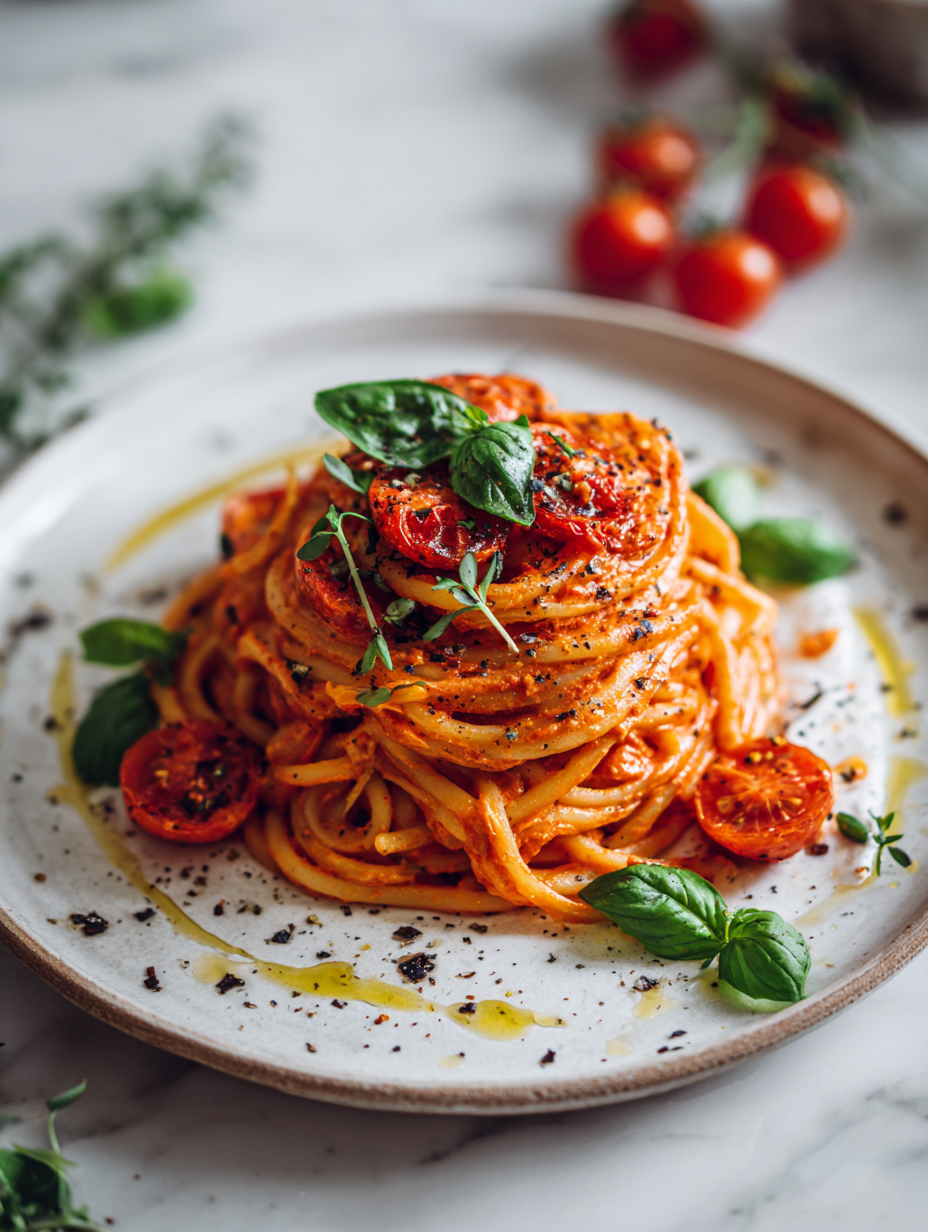
Creamy Vegan Tomato Pasta with Coconut Milk
Ingredients
Equipment
Method
- Bring a large pot of salted water to a boil and cook your pasta until al dente, about 8-10 minutes. Drain and set aside.
- While the pasta cooks, heat olive oil in a skillet over medium heat. Add minced garlic and cook until fragrant and slightly golden, about 30 seconds, filling your kitchen with a warm aroma.
- Add the crushed tomatoes to the skillet, breaking them apart with your spoon. Let the mixture simmer gently for about 10 minutes, stirring occasionally, until the sauce thickens slightly and turns a vibrant red.
- Pour in the coconut milk, stirring well to combine. Season with salt and pepper, then let the sauce simmer for another 5 minutes until it becomes creamy and coats the back of your spoon.
- Use a ladle to reserve about a cup of pasta water, then drain your cooked pasta.
- Add the drained pasta directly into the skillet with the sauce. Toss gently to coat all strands, adding reserved pasta water a little at a time if needed to loosen the sauce and help it cling to the pasta.
- Taste and adjust the seasoning with more salt, pepper, or herbs if desired. Continue tossing until everything is well combined and heated through.
- Transfer the pasta to serving bowls and garnish with freshly chopped basil or oregano. Enjoy immediately while warm, with the aroma of tropical herbs blending with the comforting tomato sauce.
Notes
Sometimes, the simplest ingredients—like ripe tomatoes and good pasta—are all you need to make something memorable. This dish is a reminder that you can elevate everyday cooking with just a little creativity and a splash of coconut milk.

Founded by Rachel Morgan, a proud home cook and foodie from Austin, Texas, this blog is all about transforming everyday meals into moments of joy.