Cooking with what’s fresh and in season feels like tapping into a secret stash of flavors. I love how a simple tray of vegetables transforms into something deeply satisfying, especially when roasted in the oven’s dry heat. There’s a quiet magic in the caramelization and the way the peppers turn smoky, the eggplant turns tender and almost creamy.
This dish is a reminder that you don’t need fancy ingredients or complicated techniques to get a hearty, comforting meal. Just a bit of patience, good olive oil, and a hot oven. Making it on a busy weeknight feels like a small victory—a way to celebrate the humble beauty of summer’s bounty.
a cook’s notes perspective on making the most of seasonal vegetables with minimal fuss
A cook’s love affair with roasted vegetables
- I love how roasting transforms the vegetables into something almost jammy and smoky.
- There’s a quiet satisfaction in tossing everything on a sheet pan and walking away, trusting the oven.
- This dish always reminds me of summer dinners with friends—easy, vibrant, and satisfying.
- Getting those caramelized bits just right feels like a small victory every time.
Why I keep coming back to this dish
- One summer, I had a bunch of ripe tomatoes and peppers that needed using. I didn’t want to fuss with a stovetop ratatouille, so I threw everything on a sheet pan. The smell of roasting garlic and vegetables filled the kitchen, making it feel like a celebration.
- That simple tray of vegetables, with its charred edges and bursting juices, made me realize how much flavor is packed into the process of roasting. It’s humble, but it feels like an indulgence.
- Sometimes, I add a splash of balsamic or a handful of olives at the end for extra depth. It’s a flexible, forgiving dish that’s perfect for experimenting.
Ratatouille: from rustic roots to modern sheet pan simplicity
Ratatouille hails from Provence, France, where vegetable dishes are celebrated for their simplicity.
The name ‘ratatouille’ comes from the Occitan word ‘ratatolha,’ meaning ‘stirred thoroughly.’
Traditionally, it’s cooked slowly on the stovetop, but roasting intensifies flavors and adds texture.
Roasting vegetables for ratatouille became popular in modern kitchens as a way to amplify flavors with less fuss.
This dish is a perfect example of how humble ingredients can be elevated through technique.
Ingredient insights & tweaks
- Eggplant: first-person, I love how it soaks up flavors and gets tender but not mushy. Swap with zucchini if needed—just watch for quicker cooking.
- Zucchini: I slice it into thick rounds, letting it hold up to roasting’s heat, adding a fresh, slightly grassy note. You can swap with yellow squash for a different color.
- Bell peppers: I prefer red or yellow for sweetness, but green adds a nice bitter edge. Roast until the skin blisters for extra smoky flavor.
- Tomatoes: I use cherry or heirloom for juiciness and color. They burst sweetly in the oven, filling the air with a fresh aroma.
- Garlic: I love roasting whole cloves—they turn sweet and mellow. Minced raw garlic, added later, keeps its punch.
Spotlight on Eggplant and Tomatoes
Eggplant
- Eggplant: It absorbs oil and flavors, so don’t skimp. Look for shiny, firm eggplants with no soft spots.
- When roasting, it gets soft and almost creamy—imagine a smoky, silky bite.
- Salt and let it sit briefly before roasting; it draws out bitterness and moisture.
Tomatoes
- Tomatoes: Their burst of juice is what makes the dish sing. Use ripe, fragrant tomatoes for maximum sweetness.
- They soften quickly, so add them later if you want some texture intact. Roasted whole or halved, they release a smoky aroma.
- Look for shiny, plump tomatoes—cracks and blisters mean flavor.
Substitutions to suit your pantry and diet
- Dairy-Free: Skip cheese or add a sprinkle of nutritional yeast for cheesy flavor without dairy.
- Gluten-Free: Serve over rice, quinoa, or gluten-free bread for a hearty, gluten-free meal.
- Low-Oil: Toss vegetables with less oil, but watch for uneven roasting or dryness.
- Vegan: Omit any cheese or animal-derived ingredients for a plant-based version.
- Extra Protein: Top with chickpeas or a drizzle of tahini for added richness.
Step-by-step guide to perfect sheet pan ratatouille
Equipment & Tools
- Large rimmed sheet pan: To hold all vegetables in a single layer for even roasting
- Parchment paper: Prevent sticking and easy cleanup
- Sharp knife and cutting board: Slice vegetables uniformly
- Spatula or tongs: Turn vegetables halfway through
- Measuring spoons: Accurate seasoning
- Herb scissors or knife: Chop fresh herbs for finishing
Step 1: Preheat oven to 220°C (430°F). Line a large sheet pan with parchment paper.
Step 2: Slice eggplant, zucchini, peppers, and tomatoes into uniform pieces, about 1/2 inch thick.
Step 3: Toss vegetables with olive oil, minced garlic, salt, pepper, and a pinch of thyme or herbs de Provence.
Step 4: Arrange vegetables in a single layer on the sheet pan, spreading them out so they aren’t crowded.
Step 5: Roast for 25-30 minutes. Check at 15 minutes—give the pan a shake or turn the veggies for even caramelization.
Step 6: Look for golden, slightly charred edges, soft and juicy centers, and fragrant garlic. The tomatoes should burst slightly.
Step 7: If edges are burnt or vegetables are drying out, reduce oven to 200°C (390°F) and roast 5-10 minutes more.
Step 8: Remove from oven, sprinkle with fresh basil or parsley. Let it sit for 5 minutes to meld flavors.
Step 9: Serve hot or at room temperature, with bread or grains. Enjoy the smoky aroma and crispy bits.
Let the dish rest for 5 minutes after roasting. Garnish with fresh herbs, drizzle with olive oil, and serve.
How to Know It’s Done
- Edges are deeply golden and slightly charred.
- Vegetables are tender but hold their shape.
- Tomatoes are bursting and juicy, not dried out.
Cooking tips & tricks
High heat (220°C/430°F) caramelizes the edges and deepens flavor.
Use a sharp knife for even slices — uneven cuts won’t roast uniformly.
Don’t overcrowd the pan; leave space for hot air to circulate.
Toss vegetables halfway through roasting to promote even browning.
Add herbs or garlic partway through to prevent burning and preserve fresh aroma.
For extra smoky flavor, toss in a pinch of smoked paprika before roasting.
Common mistakes & how to fix them
- FORGOT to preheat? Turn on oven early and use convection setting for faster roasting.
- DUMPED too much oil? Wipe excess with paper towel, or use less next time.
- OVERTURNED the vegetables? Reduce heat to 200°C (390°F) and check every 5 minutes.
- BURNED the edges? Cover loosely with foil and lower oven temperature slightly.
Quick fixes for kitchen mishaps
When veggies stick, splash a little water or broth in the hot pan to loosen.
Patch burnt edges with a sprinkle of fresh herbs and a squeeze of lemon.
Shield delicate tomatoes from direct heat if they start to overcook.
Splash vinegar or lemon juice if flavors are dull or too sweet.
Rescue over-oiled veggies with a quick rinse and dry, then roast again.
Make-ahead and storage tips
Vegetables can be chopped 1 day in advance. Keep refrigerated in an airtight container.
Roasted ratatouille keeps well for up to 3 days in the fridge. Reheat in the oven at 180°C (350°F) until bubbly.
The flavors deepen overnight, making leftovers even more flavorful.
Reheat in the oven for best texture; microwave works but may lose some crispness.
Freeze in portions for up to 2 months. Thaw overnight in the fridge, then reheat.
Why this sheet pan ratatouille matters to me
What makes sheet pan ratatouille different from the stovetop version? It’s all about the caramelized edges and the crispy bits that bake right onto the pan, giving it a richer flavor.
Can I use any vegetables I have? Yes, but stick to the classic: eggplant, zucchini, peppers, tomato. They roast evenly and meld together.
How do I prevent the veggies from drying out? Toss them in olive oil and season generously before roasting. Keep an eye on the oven and don’t overcook.
What if I don’t have a large sheet pan? Use two smaller ones or a roasting dish. Just make sure everything’s in a single layer.
Can I make this ahead? Absolutely, reheat in the oven until bubbly and crispy on top. The flavors deepen overnight.
What’s the best way to serve it? Over warm crusty bread, or with a side of rice or grains. It’s also great cold in salads.
How do I get that lovely roasted flavor? High heat — around 220°C (430°F) — makes the edges caramelize beautifully.
What if I want more spice? Add a pinch of red pepper flakes or smoked paprika before roasting.
How do I keep the tomatoes from becoming mushy? Use cherry or heirloom tomatoes sliced in half, kept whole if possible.
Can I make this vegan? Totally, just skip any cheese or dairy toppings, and it’s perfect.
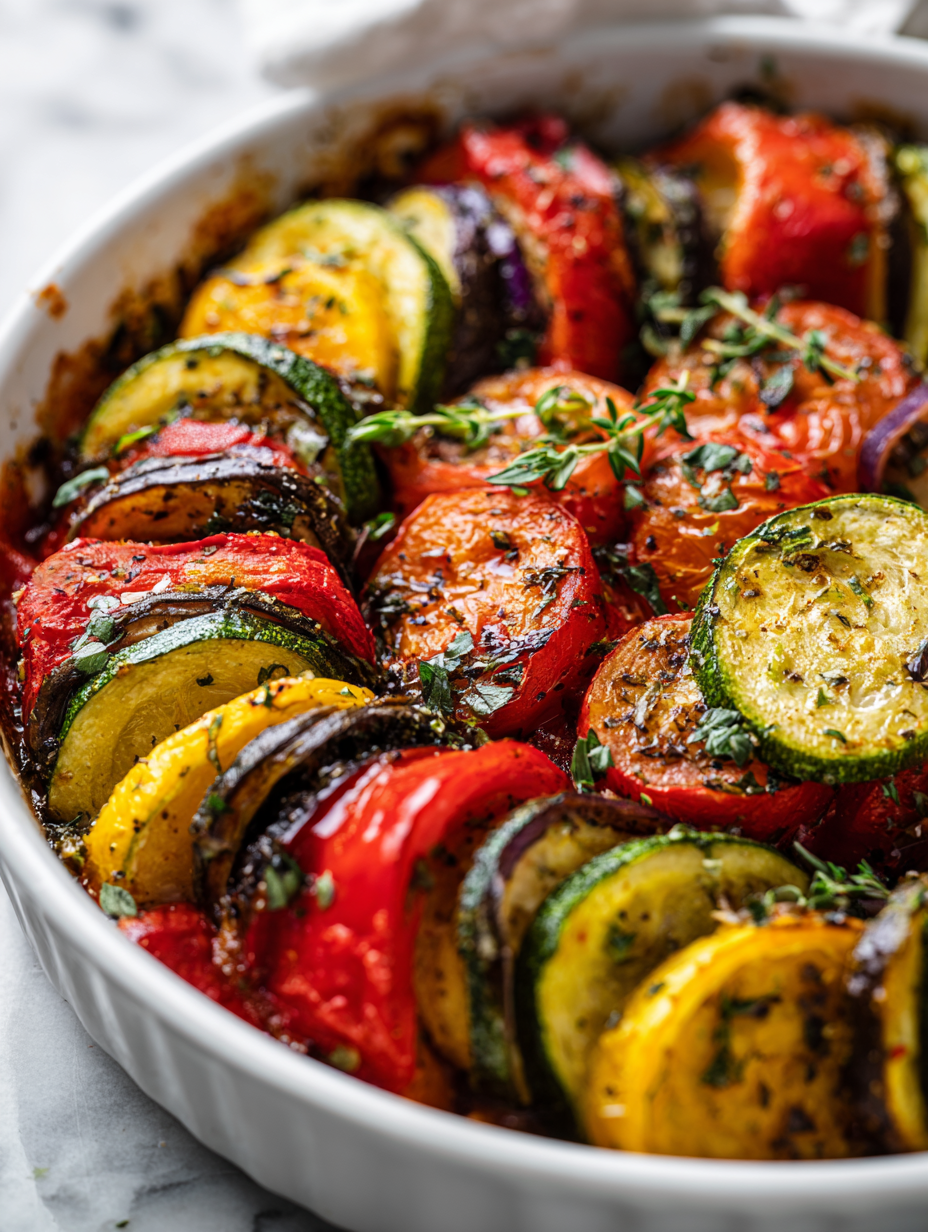
Roasted Vegetable Ratatouille
Ingredients
Equipment
Method
- Preheat your oven to 220°C (430°F) and line a large sheet pan with parchment paper.
- Slice the eggplant into 1/2-inch thick rounds, then cut each into halves or quarters depending on size. Chop the zucchini into thick rounds, about 1/2 inch thick.
- Cut the bell peppers into strips or chunks, and leave the cherry or heirloom tomatoes whole or halved for maximum juiciness.
- Place all the chopped vegetables and whole garlic cloves in a large mixing bowl. Drizzle with olive oil, sprinkle with herbs de Provence, salt, and pepper.
- Toss everything gently with your hands or a spatula until the vegetables are evenly coated and fragrant.
- Spread the vegetables in a single layer on the prepared sheet pan, making sure they aren’t crowded so they can roast evenly.
- Roast the vegetables in the oven for about 25 to 30 minutes, shaking the pan or flipping the vegetables halfway through to promote even caramelization and browning.
- Watch for the edges to turn deep golden and slightly charred, and listen for a fragrant aroma of caramelized garlic and roasted vegetables.
- Remove the pan from the oven once the vegetables are tender, with bursting juices and smoky, crispy edges.
- Transfer the roasted vegetables to a serving dish, sprinkle with chopped fresh basil or parsley, and drizzle with a little extra olive oil if desired.
- Serve warm or at room temperature, alongside crusty bread, grains, or as a hearty main for a simple, flavorful meal.
Notes
This sheet pan ratatouille is a testament that simple ingredients, treated well, can turn into something memorable. It’s perfect for lazy weekends or when you want a wholesome, veggie-packed meal without the mess. Sometimes, the best dishes are those that come together effortlessly but taste like they took hours.

Founded by Rachel Morgan, a proud home cook and foodie from Austin, Texas, this blog is all about transforming everyday meals into moments of joy.